Christopher ‘CJ’ Nurse on building JANK from a student’s idea in his content-creation class — and connecting words, local identity, and play.
A word game can do more than test spelling. It can make somebody recognize their city, their people, or a phrase they grew up hearing. That is the space JANK works in: words, culture, people, and play.
I’m Christopher “CJ” Nurse, founder of ContentCreators.life, a creative director, app developer, and professor. JANK connects those parts of my work. It started in the classroom, and it became a product people can actually play.
The idea started with a student
Mason, a student in my MCM content-creation class, presented the original game idea. I helped turn that idea into JANK and built most of the game. This was a faculty-and-student collaboration, with different contributions to the same product.
Both contributions matter. A good classroom idea deserves more than a slide deck, and getting it into a working product takes a different kind of work. The build connects the concept to an interface, playable rules, words, feedback, and a reason to come back.
Culture belongs inside the experience
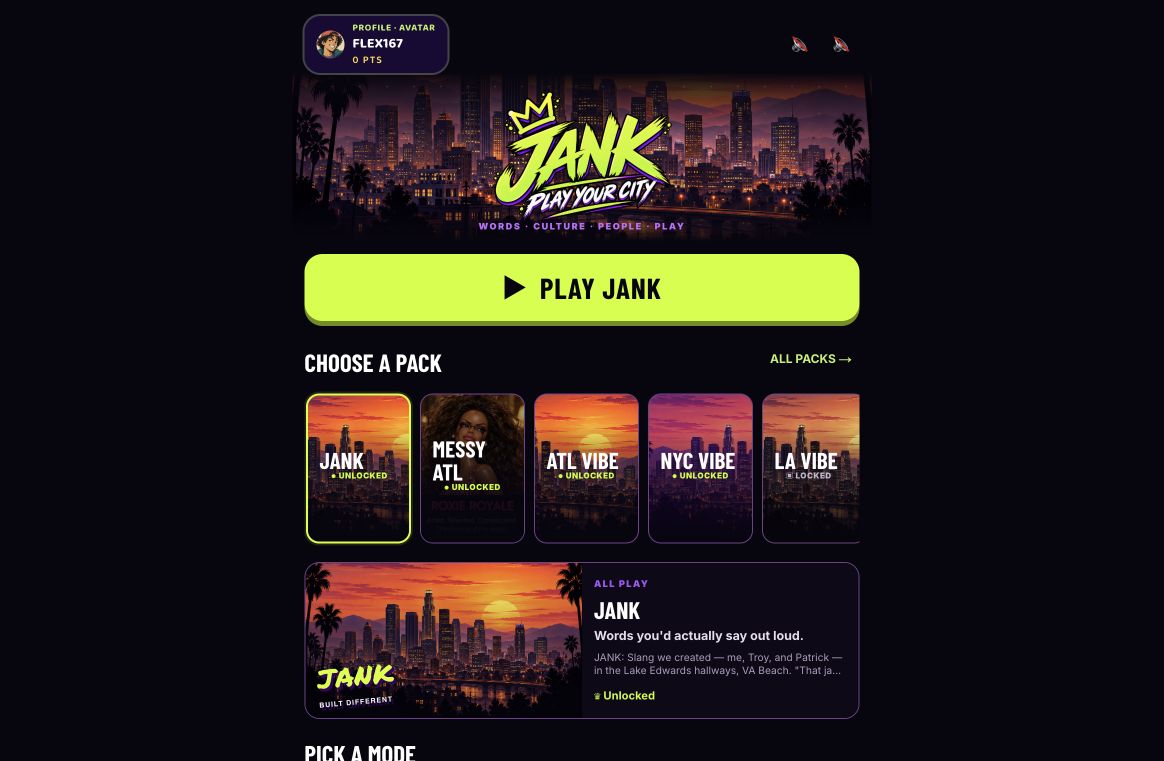
JANK’s public home screen says “Words you’d actually say out loud.” The available packs include city and regional identities alongside text slang, HBCU homecoming, and music. That gives the game a point of view before a round even starts.
Language carries context. A word can mean something different depending on who says it and where they are from. Putting culture into a word game means treating that context as a core part of the experience.
The useful design question is simple: will a player recognize something of themselves here? Local references and familiar language give a pack its character. The game still has to be clear enough for somebody new to enter it.
Give the player a clear next move
The current web experience puts pack selection and Play JANK up front. Daily gives players a recurring board; Who Want Smoke creates a way to challenge a friend. The modes offer different reasons to use the same core product.
That is where creative direction and development meet. The name, visual style, pack identity, and controls have to make sense together. A strong concept gets people interested. A legible next step gets them playing.
A working product, with room to grow
JANK has a public web experience and a project page with ways to play and learn more. The app’s public home also separates packs available now from city editions still in development. Keeping that distinction visible helps players know what they can play today.
My takeaway from this build: keep the original contribution visible, give the product a specific cultural point of view, and turn that point of view into something people can use. Build the word. Unlock the culture. No cap.
Play JANK ↗ · Explore the JANK project ↗